Friday, 29 November 2019

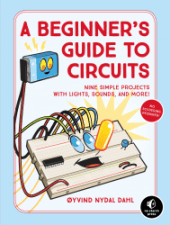
Did you know about this book?

If you were following my newsletter 2-3 years ago, you might remember 9 Circuits.

That was a very popular ebook I wrote and sold back then.

So when No Starch Press approached me suggesting we should create a new book together based on 9 Circuits, I thought:

“It’s going to be better designed, better edited, and reach a bigger audience… Yeah, let’s do it!”

And then we did it.

I usually send out a lot of emails when I release a new product.

But this one, I barely mentioned.

Why?

The reason was that I misunderstood some “lawyer language” in the contract.

So when the book was published, I was left confused about how to sell it without breaking the contract.

They suggested I could sell the old version.

But I didn’t want to sell the old book when the new one was upgraded and much better!

I want the best for my customers.

And the best was the new one.

So I just stopped selling the old book.

And I kind of just let the new book live it’s own life, without my involvement.

A bit later, the founder Bill Pollock contacted me. We had a chat and we sorted things out.

So we are all good.

And now I finally got myself around to set up a sales page and offer it to you. I have stocks both in the UK and the US.

This book is available in print.

And with an optional component kit for building the circuits.

By the way – the kit is the exact same kit as the one we use in Ohmify. So you can reuse the components for both.

If you’re curious about the book, check out the following page with more info: https://www.build-electronic-circuits.com/circuits/

Keep On Soldering!
Oyvind @ build-electronic-circuits.com

Copyright Build Electronic Circuits

Wednesday, 27 November 2019

New way to identify, manipulate topological metals for spintronics

A recent study gives researchers an easier way of finding Weyl semimetals and manipulating them for potential spintronic devices.

Glass from a 3D printer

ETH researchers used a 3D printing process to produce complex and highly porous glass objects. The basis for this is a special resin that can be cured with UV light.

Tuesday, 26 November 2019

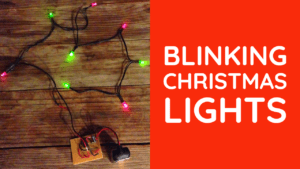
New Course: Blinking Christmas Lights

Christmas is coming up in about a month. And it’s time to build some Christmas things with electronics.

So I just added a new course project to the Ohmify library: The Blinking Christmas Lights

https://ohmify.com/courses/blinking-christmas-lights/

In this project, you’ll build a circuit that will flash a bunch of LEDs. Place them on the fireplace, in the window, or hang them on a tree for a nice Christmassy effect.

You’ll learn how to go from blinking just one LED, to blinking lots of LEDs. Or even lightbulbs.

That might sound simple (and it is), but you’ll learn some very useful stuff about using transistors and integrated circuits that I’m sure will come in handy in a lot of your future projects.

This is just one of many courses, projects, and tutorials you’ll get access to as an Ohmify member.

But the thing our members appreciate the most (according to the latest reviews about Ohmify on Google) is the ability to ask questions on the community forum.

All questions are welcome. Simple. Advanced. About your own projects. About other projects.

Click the link below to sign up:

https://ohmify.com/join/

Keep On Soldering!
Oyvind @ build-electronic-circuits.com

Copyright Build Electronic Circuits
Monday, 25 November 2019

Novel memory device can be written on and read out optically or electrically

Scientists have developed a novel storage technology based on the combination of an organic light-emitting diode (OLED) and an insulator.

Scratching the surface of perovskites

Scientists have, for the first time, characterized the structural defects that prompt the movement of ions, destabilizing the perovskite materials. The researchers' findings may inform future engineering approaches to optimize perovskite solar cells.

Thursday, 21 November 2019

Beyond Moore's Law: Taking transistor arrays into the third dimension

Silicon integrated circuits, which are used in computer processors, are approaching the maximum feasible density of transistors on a single chip -- at least, in two-dimensional arrays.

Researchers develop recyclable, healable electronics

Electronics often get thrown away after use because recycling them requires extensive work for little payoff. Researchers have now found a w...