Friday, 18 September 2020

What is Ground in Electronic Circuits?

An example circuit with lots of connections to ground

When you start learning about circuits, you’re bound to ask “what is ground?” at one point or another. Are you actually suppose to connect your circuit into the ground??

First of all: grounding in electronics is different from grounding in high voltage electrical systems. And this article is about electronics (although I’ll mention the other case at the end).

Grounding in electronics

I got an email from a reader a little while back:

«The ground symbol keeps appearing at different points in a circuit and I could not understand why a particular place was chosen for grounding. What is ground?» 

Grounding something simply means connecting it to ground.

And in electronics, ground is just a name we give to a certain point in the circuit.

For example, in a circuit with one battery (with a positive and a negative terminal), we usually refer to the negative terminal as ground.

And to simplify drawing the circuit, we use a symbol.

The ground symbol
The Ground Symbol

So instead of drawing lines to all the places that should be connected to minus, you instead place the ground symbol there. This makes the circuit diagram much cleaner when there are a lot of connections to minus.

An example circuit with lots of connections to ground
An example circuit using ground symbols

Flow of Current When the Ground Symbol is Shown

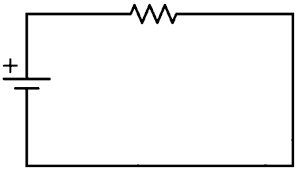
To see how the current flows in a circuit diagram with ground symbols, just connect all the points that have ground symbols. That is what you do when you build the circuit.
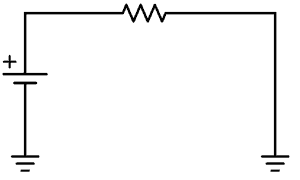
A circuit with battery and resistor connected indirectly to battery with ground symbols.
A schematic using ground symbols
A circuit with battery and resistor connected directly to battery with lines.
The same schematic shown without ground symbols

Circuits With Positive, Negative and Ground Connections

In some schematic diagrams, you’ll find a connection to a positive terminal, a negative terminal, and a ground terminal.

This is common in for example amplifier circuits:
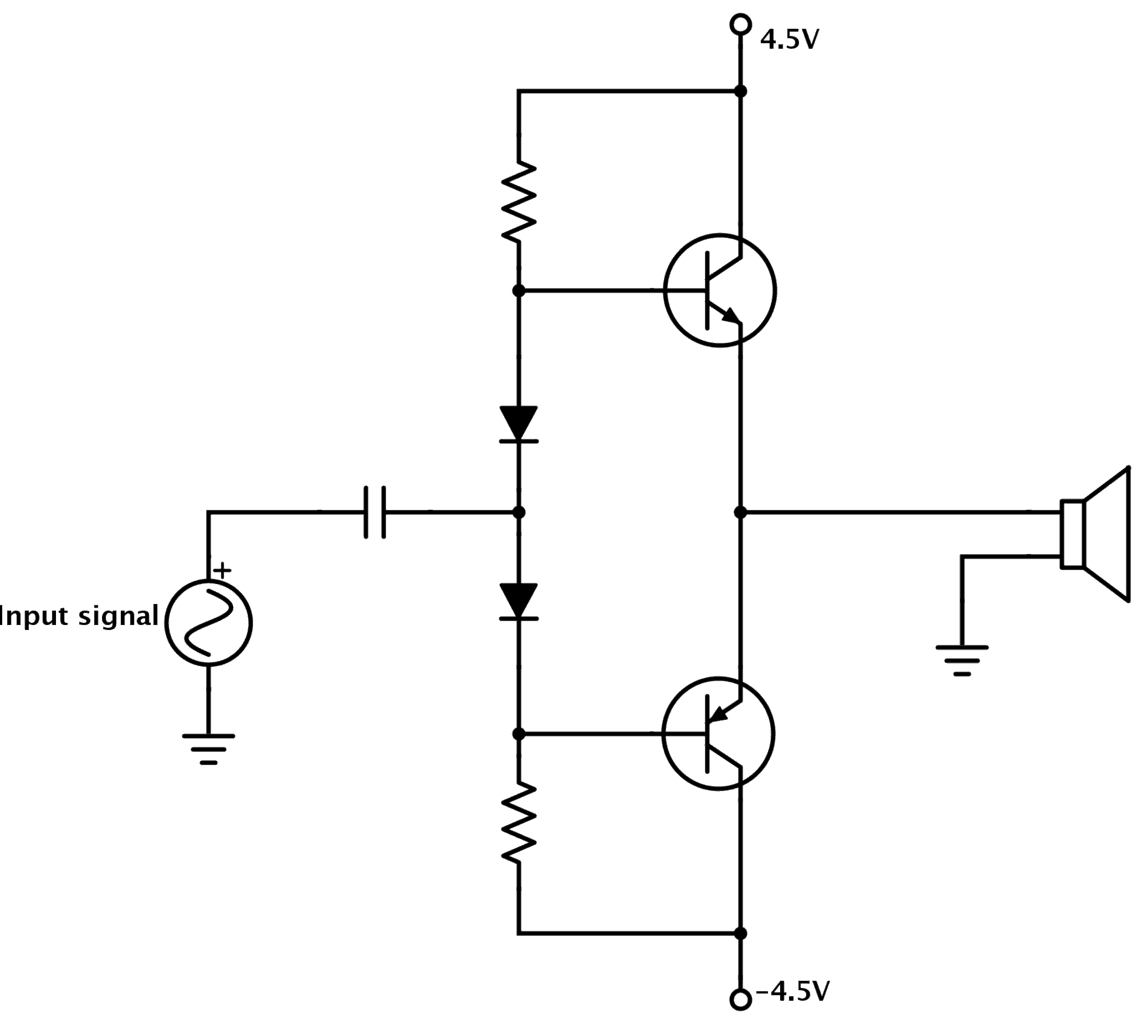
An amplifier circuit with dual power supply

So, how does this work?

In this scenario, the ground is the middle-point between the positive and the negative terminal. You can create these three voltage points by connecting two power sources in series:
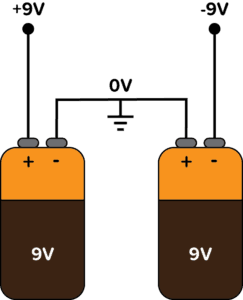
Batteries connected to acheive negative voltage
The ground when using dual power supply

Since the ground terminal is in the middle between +9V and -9V, it’s normal to call it zero volts (0V).

Click here to learn what negative voltage is.

What is Ground in High-voltage Systems?

Sometimes though, the ground term refers to an actual connection to the ground/earth. But that is usually when talking about high-voltage systems.

That’s not my field, but for the curious ones – read more here: http://en.wikipedia.org/wiki/Ground_(electricity)

Questions? Let me hear ’em in the comments below!

Copyright Build Electronic Circuits

Thursday, 17 September 2020

'Floating' graphene on a bed of calcium atoms

Adding calcium to graphene creates an extremely-promising superconductor, but where does the calcium go? In a new study, a Monash-led team has for the first time confirmed what actually happens to those calcium atoms. Surprising everyone, the calcium goes underneath both the upper graphene sheet and a lower 'buffer' sheet, 'floating' the graphene on a bed of calcium atoms.

Sturdy fabric-based piezoelectric energy harvester takes us one step closer to wearable electronics

Researchers presented a highly flexible but sturdy wearable piezoelectric harvester using the simple and easy fabrication process of hot pressing and tape casting. This energy harvester, which has record high interfacial adhesion strength, will take us one step closer to being able to manufacture embedded wearable electronics.

Medical robotic hand? Rubbery semiconductor makes it possible

A medical robotic hand could allow doctors to more accurately diagnose and treat people from halfway around the world, but currently available technologies aren't good enough to match the in-person experience. Now researchers have reported that they have designed and produced a smart electronic skin and a medical robotic hand capable of assessing vital diagnostic data by using a newly invented rubbery semiconductor.

Wednesday, 16 September 2020

Energy harvesting goes organic, gets more flexible

The race is on to create natural biocompatible piezoelectric materials for energy harvesting, electronic sensing, and stimulating nerves. A group of researchers has explored peptide-based nanotubes and reports using a combination of ultraviolet and ozone exposure to generate a wettability difference and an applied field to create horizontally aligned polarization of nanotubes on flexible substrates with interlocking electrodes. The work will enable the use of organic materials more widely.

New way of controlling conductivity of materials at the nanoscale

A new discovery is an important step towards smaller, more advanced electronics. And maybe more environmentally friendly gadgets, too.

Reviewing the quantum material 'engine room'

An Australian collaboration reviews the quantum anomalous Hall effect (QAHE), one of the most fascinating and important recent discoveries in condensed-matter physics. QAHE allows zero-resistance electrical 'edge paths' in emerging quantum materials such as topological insulators, opening great potential for ultra-low energy electronics.

Researchers develop recyclable, healable electronics

Electronics often get thrown away after use because recycling them requires extensive work for little payoff. Researchers have now found a w...